
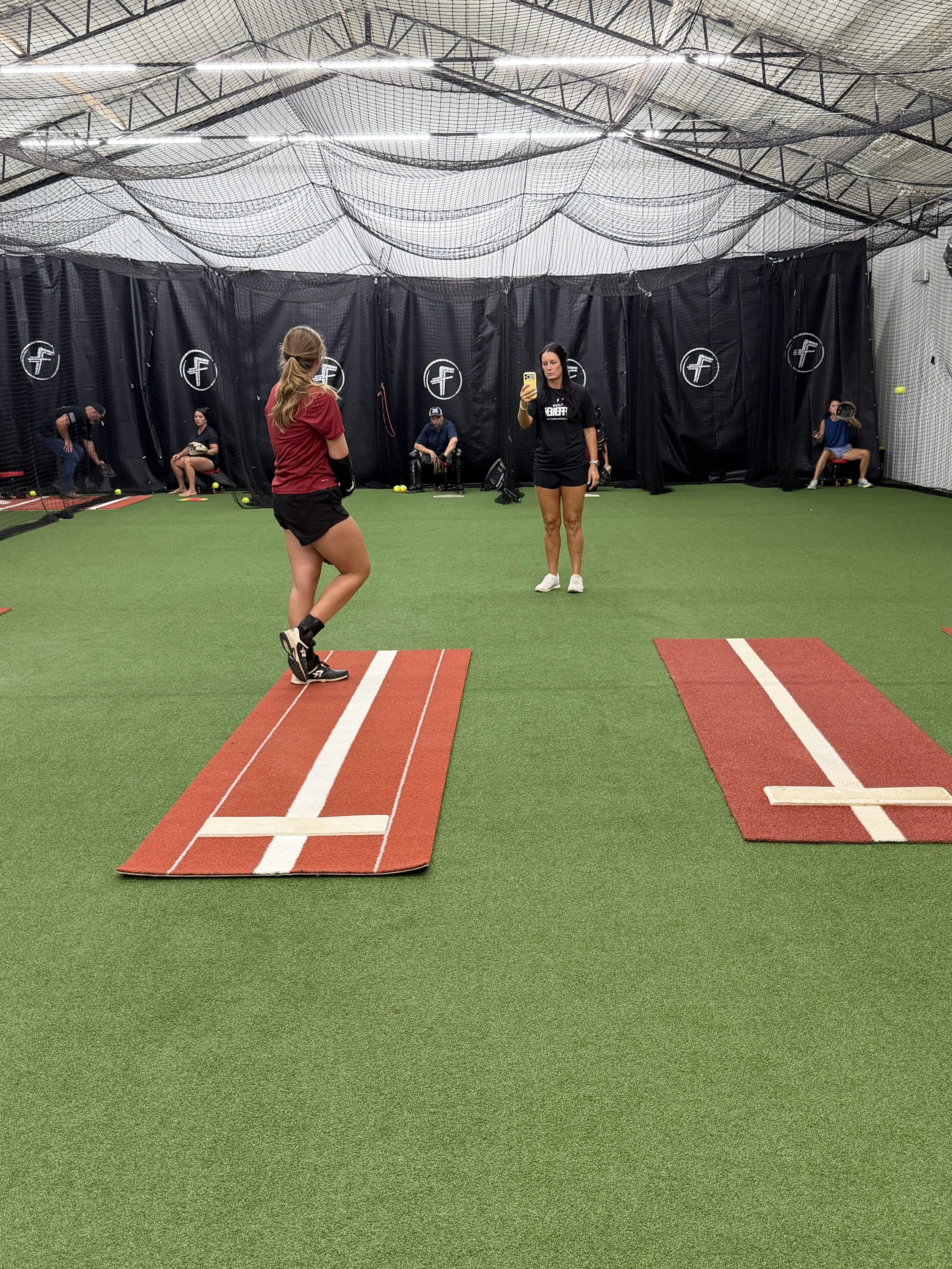
Pitching Intensives
Complete assessment. Clear direction. Customized training.
Has her progress stalled, and you’re not sure why?
Sometimes the solution is easy to see. Sometimes it isn’t. Maybe her speed has stopped moving. Maybe a pitch has become inconsistent. Maybe she keeps hearing the same correction, but nothing really changes.
The question isn’t always what looks wrong.
The better question is: What is actually shaping the way she moves and the way the ball performs?
That answer may live in a lot of different places. Is there a mobility limitation? Is there a stability issue? What does her strength look like? How is her timing? What is her motor profile? Before we starting changing things, our job is to understand the athlete standing in front of us. Two pitchers can show the same thing on video and need two completely different solutions. That’s why we don’t start an Intensive by handing out more drills, more cues, or more things to fix. We assess first.
During our intensives we will always start with an assessment so that we can map out what actually deserves our attention. We look at how your pitcher naturally moves, what positions she can access and control, how she best produces force, what her mechanics are showing, and what the ball is actually doing. Then we connect those pieces to understand the athlete as a whole — what she naturally does well, where limitations may exist, and how those things are shaping the pitch.
Not every limitation needs an immediate fix. Some need time. Some require work outside the pitching lesson. Some things we leave alone and don’t touch. And some simply mean we need to find a better way for that athlete to move and perform within what her body gives her.
Our job is to know the difference.
We don’t change things just because we can. We figure out what matters, why it matters, and what will actually move your pitcher forward.
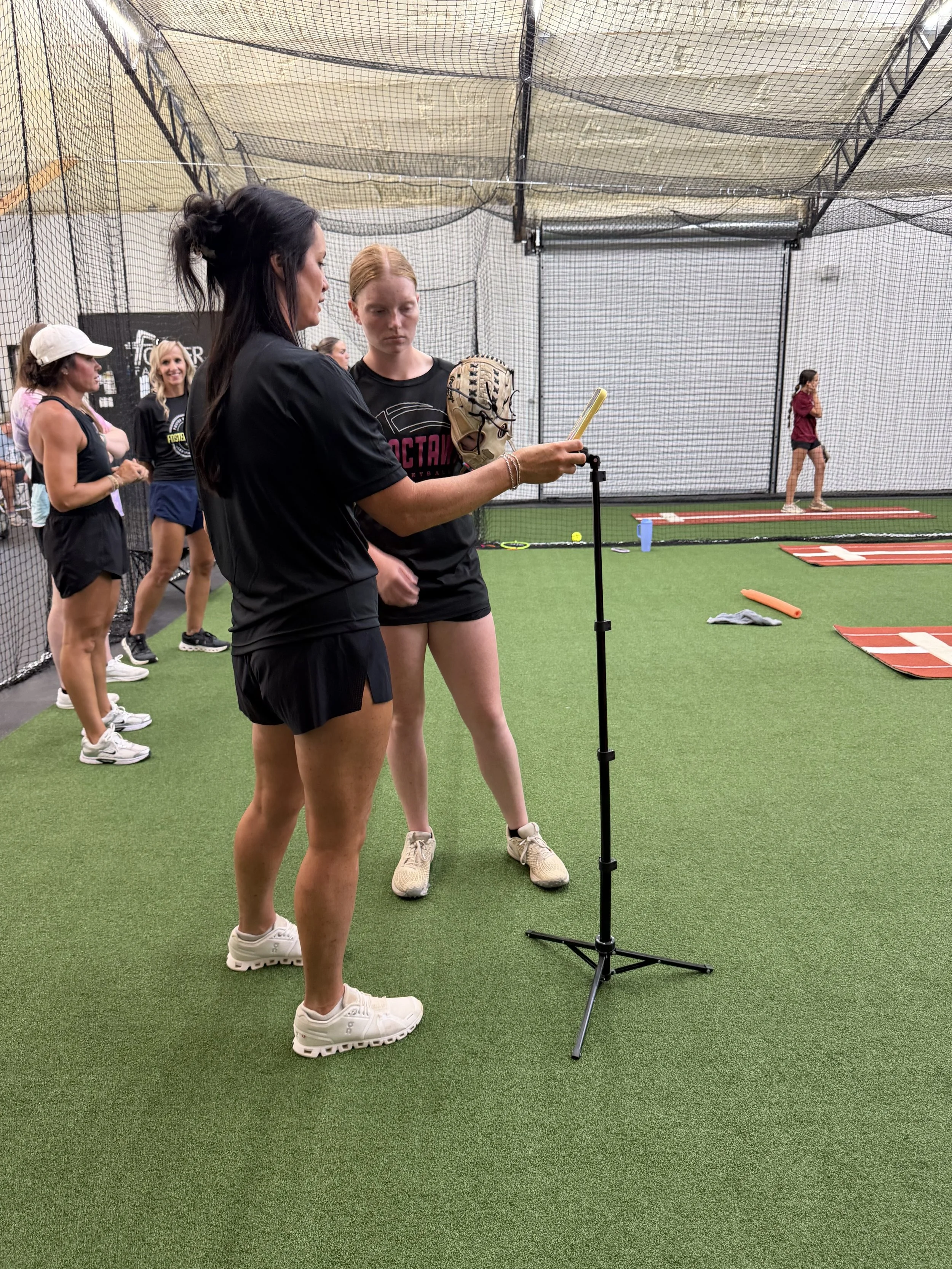
Every Intensive Starts With an Assessment
Before we train, we need to understand what we’re actually training. The first hour of every Intensive is dedicated to a complete assessment so we can look at the athlete from more than one angle. We’re not just watching a few pitches and deciding what we want to change. We’re building a full picture of the athlete — how her body moves, where she has limitations, how she produces force, how the pitch is organized, and what shows up in the ball data.
The assessment helps us identify what she does well, what may be limiting her, and where the biggest opportunity exists. Sometimes that means improving a limitation. Sometimes it means working around one. And sometimes the best path forward is leaning harder into something she already does exceptionally well.
During the Assessment period we will go through the following phases:
Phase 1:
Motor Profile
Every athlete organizes movement a little differently. We look at her natural movement preferences, how she creates force, and which movement strategies come most naturally to her. This helps us coach the athlete in front of us instead of forcing every pitcher into the same model. Phase 2:
Mobility & Stability
Can she get into the positions we’re asking for? And just as important — can she control them? Sometimes what looks like a mechanical problem is really a mobility limitation. Other times, an athlete has plenty of range but lacks the stability to control it. We want to know the difference. Phase 3:
Strength
We also look at whether the athlete has the strength needed to support the positions and movement demands of the pitch. If the body isn’t strong enough to own a position, simply cueing that position over and over usually won’t solve the problem. Phase 4:
Video Analysis
Then we break down the pitch itself. We look at the entire movement — not just one frame or one position. That may include: sequencing, posture, landing, weight shift, timing, arm action, release, how efficiently energy is moving through the pitch. The goal is to understand how the pieces are working together. Phase 5:
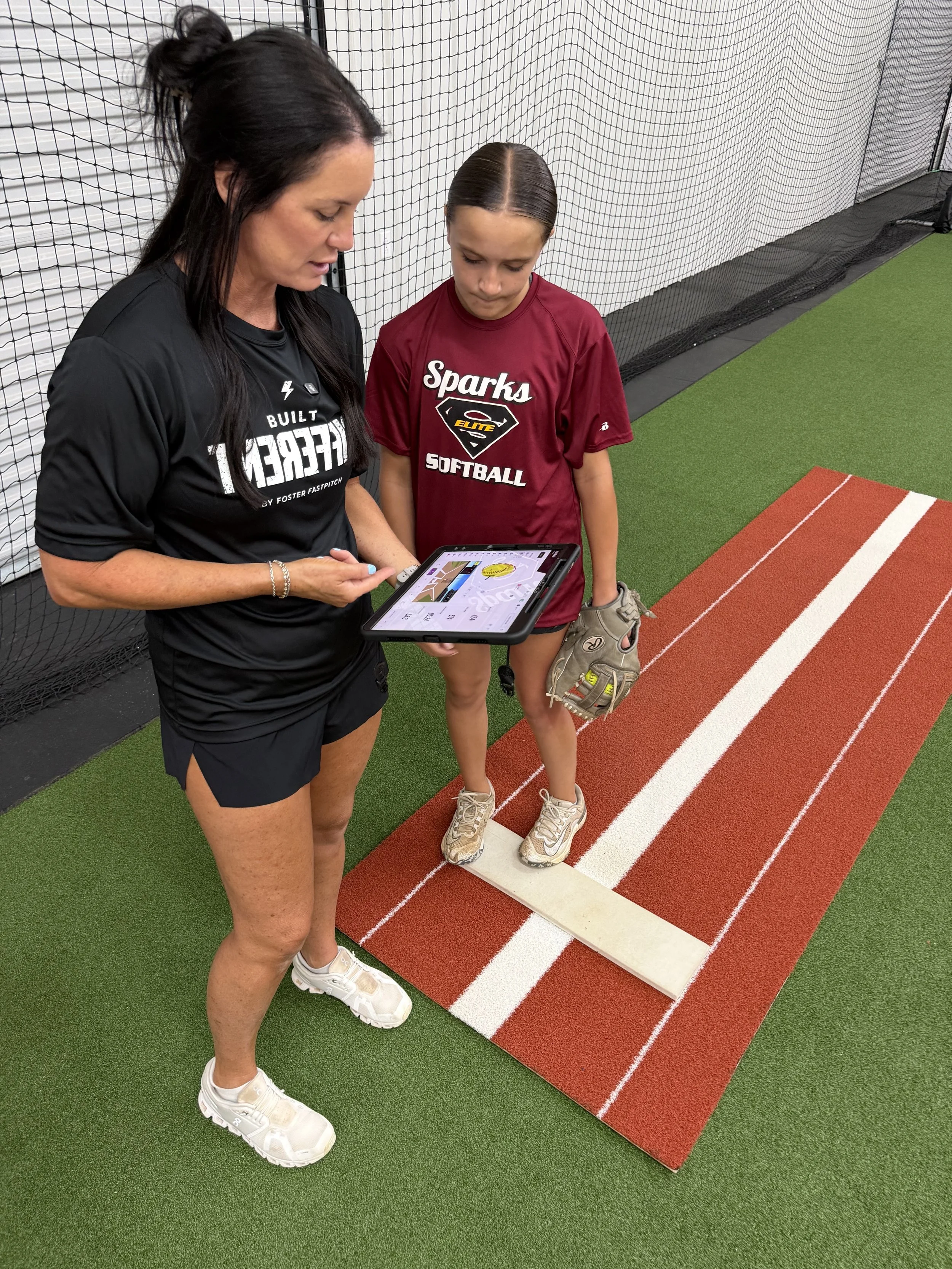
Rapsodo Data
Rapsodo gives us objective data on what the ball is actually doing — including velocity, spin, movement, and pitch shape. Rapsodo helps us see what the ball is doing — not just what needs improvement, but where the athlete may already have a natural advantage we can build around.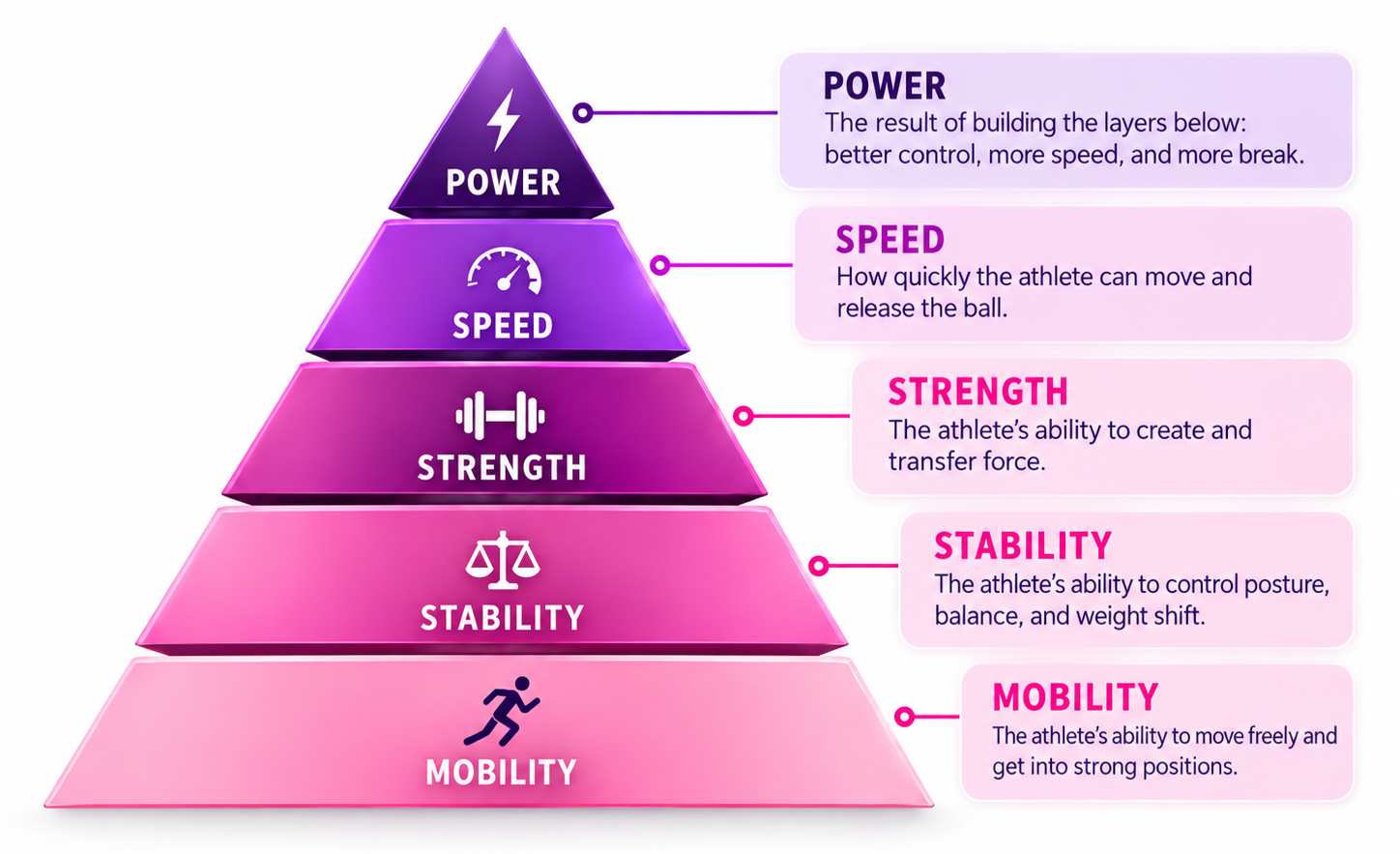
Most pitchers come in wanting something at the top of the pyramid — more velocity, better movement, more control, or a better pitch shape.
But before we chase the result, we want to know what is underneath it.
Mobility → Stability → Strength → Speed → Power
Can she access the positions she needs?
Can she control them?
Does she have the strength to support them?
Can she move with speed and efficiency?
And ultimately, can she turn all of that into a better pitch?
The assessment helps us figure out where your athlete actually needs to start.
Not every pitcher needs more mobility.
Not every pitcher needs more strength.
Not every pitcher needs a mechanical overhaul.
That is what the rest of the Intensive is built around.
How We Decide What Comes Next
Intensive Requirements:
Pitching Intensives require a minimum of THREE 1-hour sessions.
Those sessions may be completed in one day or split across 2 days, depending on the athlete and scheduling availability.
The first hour is always the assessment. From there, the remaining sessions are built around what we find and what your pitcher needs most.
Age Guidelines:
Coach Kerri primarily works with athletes ages 14+.
Athletes ages 12–14 may be considered on a case-by-case basis depending on skill level and pitching experience.
Athletes under age 12 will typically work with Coach Lacy, who specializes in younger pitchers and foundational development. Younger athletes may occasionally be considered for training with Kerri based on experience and skill level.
Hour 1:
Complete Assessment - $200
Motor profile, mobility, stability, strength, video analysis, and Rapsodo data. This is where we identify what actually deserves our attention first.
Hour by Hour: What Your Pitcher Can Expect
Hour 2:
Practical Pitching + Adjustments - $160
We take what we learned from the assessment and begin applying it through pitching work, movement adjustments, drills, continued data, or pitch development.
Hour 3:
Continue Training + Build the Plan - $160
We continue working through the highest-priority areas and make sure your pitcher leaves knowing what matters most and how to continue training after the Intensive.
Training hours with Coach Lacy are $145/hour. Additional hours may be added when appropriate.
Minimum 3-hour Intensive with Kerri: $520
How to Book Your Intensive:
To be considered for an Intensive, email us at fosterfastpitchacademy@gmail.com with the subject line: INTENSIVE – [Athlete Name & Age]
Please include all of the following:
⚪️ Athlete name
⚪️ Age and current grade
⚪️ City and state
⚪️ How long she has been pitching
⚪️ Current team / level of play
⚪️ Current velocity, if known
⚪️ Pitches she currently throws
⚪️ What she is currently struggling with
⚪️ What you would most like help with during the Intensive
⚪️ Dates or timeframes you are considering
⚪️ 2 Required Pitching Videos
Please make sure your email includes all requested information and both video angles. We will only move forward with scheduling once the complete inquiry has been received.
Required Pitching Videos:
Side view of the full pitching motion
Rear view, positioned slightly off the throwing-arm side so we can clearly see the pitch from behind
These videos help us get an initial look at your pitcher before determining fit and scheduling.
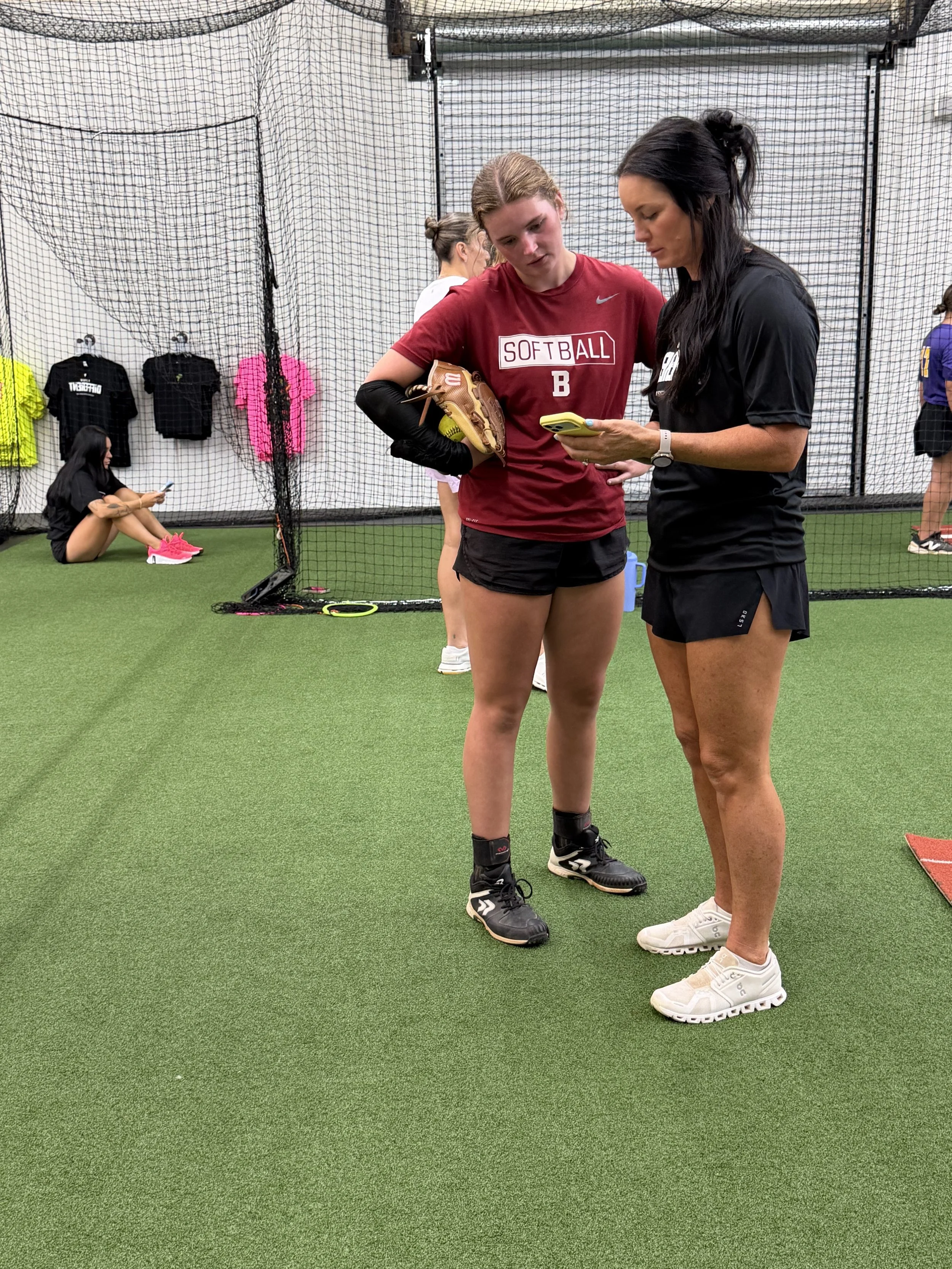
What You Leave With
The goal of an Intensive is not to give your pitcher a long list of corrections. It is to give her clarity.
By the end of the Intensive, your pitcher should have a clear understanding of what we found, what needs attention first, and what can wait. She should leave knowing exactly what to work on next — and why.
The Intensive gives us the time to assess, make adjustments, and build a direction your pitcher can continue working from after she leaves.
Traveling to Foster Fastpitch?
If you're traveling in for an Intensive, here are the closest accommodations and airport options.
Recommended Hotel:
Holiday Inn Express & Suites McCalla – Birmingham West
4703 Bell Hill Road McCalla, AL 35111
Recommended Airport:
Birmingham-Shuttlesworth International Airport (BHM)
Important: Facility address, arrival instructions, and additional scheduling details will be provided after your Intensive is booked.